


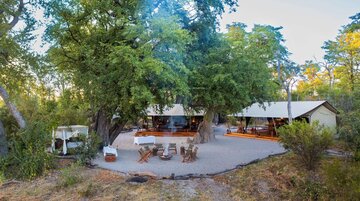
 LuxurySelinda Explorers CampSelinda Explorers Camp is an intimate, luxury tented safari camp in Botswana's Selinda Reserve, set on the banks of the Selinda Spillway. Designed in…FromR19,322pp / night sharingView
The reserve
Okavango Delta
The Okavango Delta is one of Africa’s most sought-after safari destinations and it has few rivals when it comes to watching wildlife.
Overview
Why go
The Okavango Delta is one of Africa’s most sought-after safari destinations and it has few rivals when it comes to watching wildlife. The Delta consists of a mix of private and community concessions, as well as Moremi Game Reserve. Together they offer a true wilderness experience with world-class wildlife viewing and stunning scenery. Walking safaris and mokoro trips are a great addition to the game drives, which are a real Okavango specialty.
Superb wildlife viewingDaytime and night game drivesExceptional service and hospitalityOff-road driving allows close viewing of animals
Wildlife
Comprising such a vast area of diverse habitats, the delta provides a variety of wildlife depending on your location. Water-based camps are more focused on water-safari’s abundant in birdlife and excellent for crocodile and hippo sightings, whereas the dry season attracts a huge number of animals making for thrilling game viewing with four of the Big Five easily spotted.
Scenery
The lush environment attracts an array of wildlife, birdlife and boasts a variety of unique plant life. Private reserves and world-class lodges reached by charter plane, combined with excellent game viewing and expert safari guides make a visit to the Delta a breath-taking journey of exploration amidst intriguing sights of natural wonder.
Best Time to Visit
Due to vast differences in accessibility and water levels during periods of the year, the Okavango Delta, for the most part, has seasonal wildlife viewing.
Weather & Climate
Although distinct dry and wet seasons are present, the climate of the Okavango Delta is generally warm to hot with November or December rains breaking the peak of the fiercest heat. The last rain of the wet season usually falls in April.
At a glance
CountryBotswana
StatusUNESCO World Heritage Site
Size15,000 – 22,000 km² seasonally
MalariaMalaria area; prophylaxis advised
Camps & lodges38 contracted properties
Best monthsApril to October (flood peaks June – August)
Winter days6–25 °C (43–77 °F) in July
AccessCharter flight from Maun
Birds400+ species
Wildlife & animals
What you are likely to see
Comprising such a vast area of diverse habitats, the delta provides a variety of wildlife depending on your location. Water-based camps are more focused on water-safari’s abundant in birdlife and excellent for crocodile and hippo sightings, whereas the dry season attracts a huge number of animals making for thrilling game viewing with four of the Big Five easily spotted. Lion, cheetah, leopard and African wild dog share the floodplains with large herds of elephant and buffalo. Both black and white rhino have been re-introduced, but sightings of these magnificent endangered giants are not always guaranteed. Carnivores such as lion, hyena, and leopard are attracted by the mass of herbivores such as elephant, buffalo, giraffe, red lechwe, various antelope and zebra. With constant water supply drawing more than 400 bird species in the delta, this is a prime birding destination. Walking safaris and mokoro trips on the water are a great way to get a close-up look at the birds, especially waders and remarkable water-loving species that call the area home. Many migrant species are present during the wet season, making this an ideal time for bird-lovers to visit the delta.
Elephant
AbundantGiraffe
CommonHippo
AbundantBuffalo
CommonZebra
CommonWildebeest
CommonWhite Rhino
RareBlack Rhino
RareLion
OccasionalLeopard
OccasionalCheetah
RareHyena
OccasionalWild dog
OccasionalBest time to visit
Month by month
Due to vast differences in accessibility and water levels during periods of the year, the Okavango Delta, for the most part, has seasonal wildlife viewing. Produced by seasonal flooding, the Okavango River drains the summer rainfall from the Angola highlands with the surge flowing across the area of the delta over the next four months (March–June). The flood peaks between June and August, during Botswana’s dry winter months, when the delta swells to three times its permanent size, attracting animals from kilometres around and creating one of Africa’s greatest concentrations of wildlife. Due to this influx of wildlife, the best time to visit is in the dry months, from April to October. This time is also best for mokoro trips at ideal water levels. During the wet months, from January to March, many areas become inaccessible, and some lodges close down. The Okavango Delta is excellent for bird watching throughout the year, but the ideal time is in the wet season however, storms and lower water levels can limit activities. Low season rates generally apply from November to May with extremely hot and sometimes uncomfortable weather peaking in October. July to September is high season months, most ideal for an adventure in the magnificent Okavango Delta.
Jan
Green
Feb
Green
Mar
Green
Apr
Good
May
Good
Jun
Peak
Jul
Peak
Aug
Peak
Sep
Peak
Oct
Good
Nov
Green
Dec
Green
PeakGoodGreen season
April - May
The beginning of the dry season features plenty of sunshine, greenery and mostly dry, warm weather.
June - August
Slightly cooler, but still dry, the pleasant temperature during this season makes for peak tourist visits. Early morning and evenings do however show a drop in temperature so don’t forget a
September - October
Towards the end of the dry season temperatures average a stifling 35°C/95°F.
November - December
Early and intermittent rains start to fall with cool and pleasant mornings.
January - February
Powerful afternoon storms are common during this time and can disrupt game viewing activities.
March
Mornings are still pleasantly cool as rains start to fade to intermittent afternoon showers.
Weather & climate
Climate chart
Although distinct dry and wet seasons are present, the climate of the Okavango Delta is generally warm to hot with November or December rains breaking the peak of the fiercest heat. The last rain of the wet season usually falls in April. See our month-by-month climate guide below:
| Month | Jan | Feb | Mar | Apr | May | Jun | Jul | Aug | Sep | Oct | Nov | Dec |
|---|---|---|---|---|---|---|---|---|---|---|---|---|
| Min °C | 19 | 19 | 18 | 15 | 10 | 7 | 6 | 9 | 14 | 18 | 19 | 19 |
| Min °F | 66 | 66 | 64 | 59 | 50 | 45 | 43 | 48 | 57 | 64 | 66 | 66 |
| Max °C | 31 | 31 | 31 | 30 | 28 | 25 | 25 | 25 | 32 | 35 | 33 | 32 |
| Max °F | 88 | 88 | 88 | 86 | 82 | 77 | 77 | 77 | 90 | 95 | 91 | 90 |
Getting there
Reaching the Okavango Delta
Although accessible on a fairly long road trip from Chobe, the easiest, safest and quickest way to reach your lodge destination in the delta is by way of chartered flight from Maun Airport. As there are no scheduled flights to the Okavango Delta, it is customary for your tour operator to take care of charter flight bookings between parks as part of your tour package. The eastern part of the delta can also be accessed directly from Maun by 4x4, without the need for a chartered flight. To book your International and local flights, it is best to discuss options with our agents. They will be able to secure the best tariffs and match it with your safari dates.
By air
Gateway: Maun Airport (MUB)
International: Via Johannesburg or Cape Town, about 2 hours
Charter to camp: 20 to 45 minutes by light aircraft, one departure a day
Booked by: Your specialist, with the stay
By road
Eastern Delta: Khwai and Moremi by 4x4 from Maun, 3 to 5 hours
From Chobe: A long day's drive; most itineraries fly
Inside the Delta: Camp vehicles, boats and mokoro only
Good to know
Combines well with: Chobe · Victoria Falls · the Makgadikgadi pans
Malaria: Malaria area; prophylaxis advised
Minimum stay: Three nights advised, two camps for water and land
Accommodation
37 camps
37 camps match
LuxurySelinda Explorers CampSelinda Explorers Camp is an intimate, luxury tented safari camp in Botswana's Selinda Reserve, set on the banks of the Selinda Spillway. Designed in…FromR19,322pp / night sharingView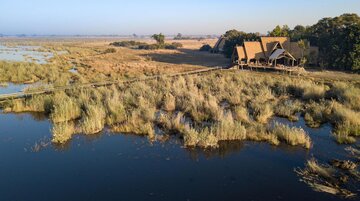 LuxurySelinda CampNestled on the banks of the Selinda Spillway in Botswana's private Selinda Reserve, Selinda Camp offers an exclusive luxury safari in one of Africa's…FromR33,893pp / night sharingView
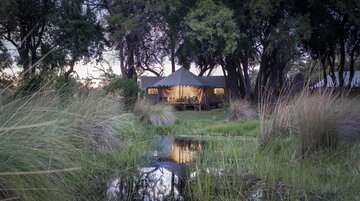 Land and waterDuba Explorers CampDuba Explorers Camp is an intimate luxury safari camp in the private Duba Concession of Botswana's Okavango Delta. Part of the exclusive Explorers…FromR23,645pp / night sharingView
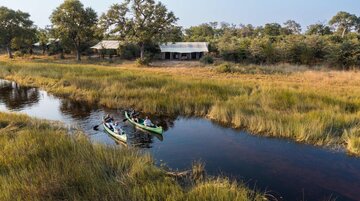 LuxuryOkavango Explorers CampSet in the remote southwest of Botswana’s private Selinda Reserve, Okavango Explorers Camp is a brand-new safari camp where the upper Okavango Delta…FromR19,322pp / night sharingView
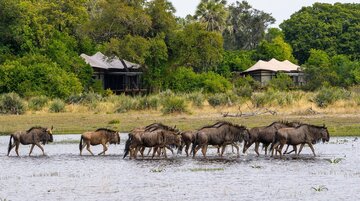 LuxuryTubu Tree CampPerched beneath a lush tree canopy and connected by elevated wooden walkways, Tubu Tree is an intimate safari camp offering breathtaking views across…FromR24,170pp / night sharingView
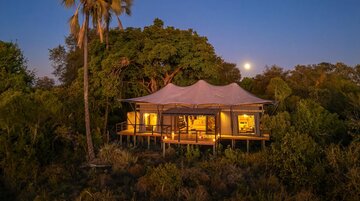 LuxuryLittle Tubu CampConnected by elevated wooden walkways, Little Tubu’s three luxury tents lead to an intimate lounge and dining area, while the bar and swimming pool…FromR24,134pp / night sharingView
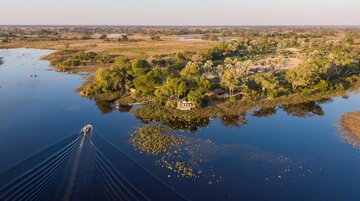 Land and waterPelo CampNestled beneath a lush canopy of towering trees, Pelo is an intimate Okavango Delta retreat featuring just five elegant en-suite tents, surrounded by…FromR10,730pp / night sharingView
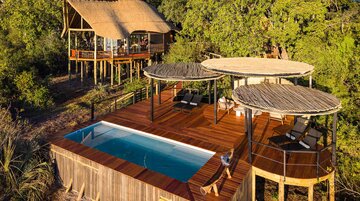 LuxuryKwetsani CampReopened in June 2026 following an extensive rebuild, Kwetsani offers an intimate and contemporary safari retreat in the heart of the Okavango Delta.…FromR26,129pp / night sharingView
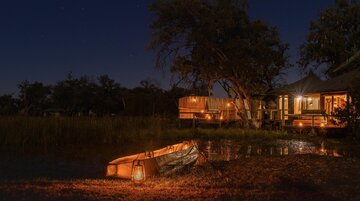 Family friendlyLittle Vumbura CampNestled on a secluded island surrounded by the permanent waters of the Okavango Delta, this enchanting safari camp offers an intimate and authentic…FromR25,692pp / night sharingView
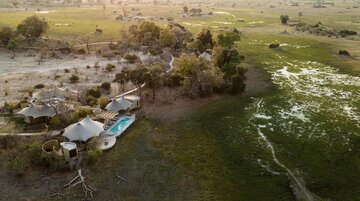 Land campLittle Mombo CampIntimate, exclusive and truly extraordinary , Little Mombo is one of Botswana's most sought-after safari retreats. Set within the pristine wilderness…FromR49,932pp / night sharingView
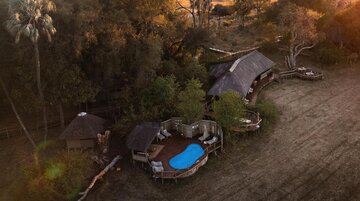 Family friendlyChitabe Lediba CampTucked away on beautiful Chitabe Island, Chitabe Lediba offers an exclusive and intimate safari retreat overlooking a vibrant waterhole. Smaller than…FromR24,961pp / night sharingView
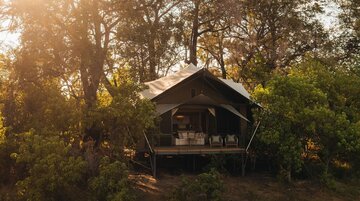 Land campChitabe CampSet within 28,000 hectares of private conservation land in the south-eastern Okavango Delta, Chitabe is one of Botswana's premier predator…FromR27,974pp / night sharingView
 Land campKarangoma CampKarangoma is the result of a partnership with local elder Olatotse Sarefo and is rooted in Bukakhwe San and Hambukushu culture. The name itself is a…FromR11,252pp / night sharingView
 LuxurySplash CampSet in the heart of the Okavango Delta’s exclusive Kwara Private Reserve, Splash Camp is perfectly positioned around a natural waterhole that draws…FromR17,122pp / night sharingView
 Family friendlyMachaba CampSituated in the game rich Khwai area on the eastern tongue of the Okavango Delta, lies the sophisticated Machaba Camp. The Khwai Concession is 35 000…FromR12,354pp / night sharingView
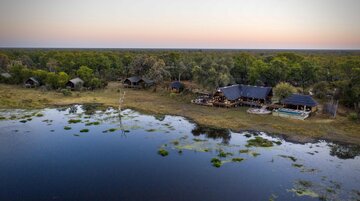 LuxurySable AlleyTucked away in one of Botswana’s best-kept secrets, Khwai Private Reserve is home to the exquisite Sable Alley — a sanctuary of light-filled,…FromR17,317pp / night sharingView
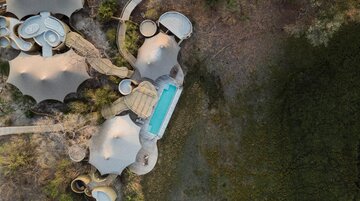 LuxuryMombo CampMombo Camp, just off the northern tip of Chief’s Island in the Okavango Delta, is built under large shady trees and overlooks a wonderful floodplain…FromR49,932pp / night sharingView
 Land and waterCamp MoremiPeering out beneath towering ebony trees, Camp Moremi captures the true essence of safari in the renowned Xakanaxa area of the Moremi Game Reserve.…FromR10,647pp / night sharingView
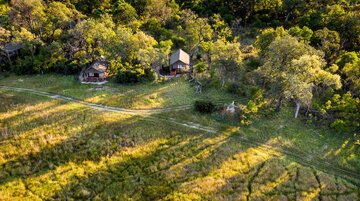 Land campSanctuary Stanley’s CampThis classic tented safari camp is set within 260,000 acres of pristine African wilderness in a private concession in the renowned Okavango Delta,…FromR17,122pp / night sharingView
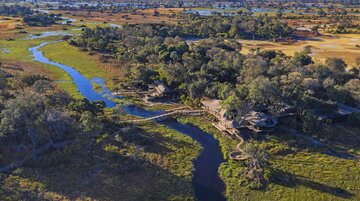 Family friendlyXigera Safari LodgeSet within the world-renowned Moremi Game Reserve, Xigera Safari Lodge enjoys private access to a pristine 4,500-hectare wetland sanctuary in the…FromR44,844pp / night sharingView
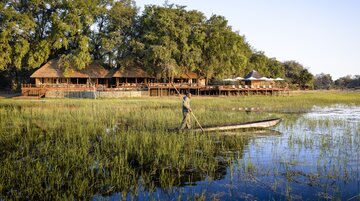 LuxurySanctuary Chief’s CampSituated on Chief’s Island in the heart of the Okavango Delta, wildlife and wilderness are as abundant as action, adrenaline, refinement and…FromR39,136pp / night sharingView
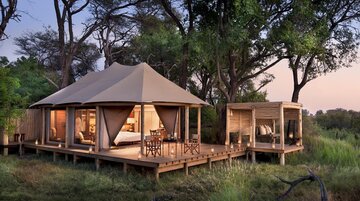 HoneymoonNxabega Okavango Tented CampRATING: A maze of sparkling lagoons, meandering channels and overgrown islands teeming with wildlife, Botswana’s Okavango Delta lies like a sparkling…FromR27,151pp / night sharingView
 HoneymoonXaranna Okavango Delta CampRATING: Tucked awa y on its own private island in the heart of the Okavango Delta, Xaranna Camp offers an intimate escape within an exclusive…FromR30,303pp / night sharingView
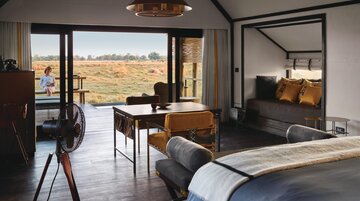 HoneymoonBelmond Eagle Island LodgeBelmond Eagle Island Lodge has reopened as the ultimate Okavango Delta water- experience-focused safari lodge, unveiling a sleek new look after an…Rates on enquiryView
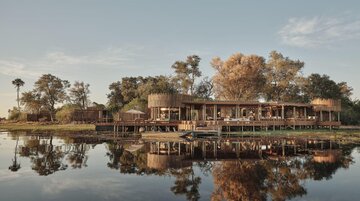 HoneymoonSanctuary Baines’ CampRATING: Sanctuary Baines’ Camp is located on a vast private concession bordering the Moremi Game Reserve in Botswana’s Okavango Delta and with its…FromR24,460pp / night sharingView
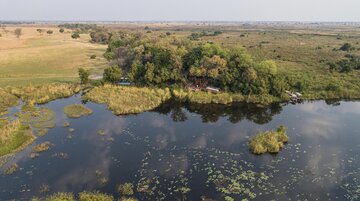 HoneymoonShinde CampNestled on a lush palm island in the heart of the northern Okavango Delta, Shinde is an intimate, classic camp located on the edge of Shinde Lagoon,…FromR12,556pp / night sharingView
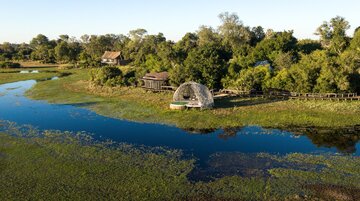 LuxuryJao CampJao Camp – Okavango’s Ultimate Safari Escape Nestled deep in Botswana’s Okavango Delta, Wilderness Jao is where lush riverine forests meet expansive…FromR30,135pp / night sharingView
 HoneymoonGomoti Plains CampRATING: The Gomoti Plains is located in a community run concession, on the edge of the Gomoti river system southeast of the Okavango Delta. The…FromR19,845pp / night sharingView
 HoneymoonQorokwe CampThe name Qorokwe means “the place where the buffalo broke through the bush into the water" and is evocative of the high-density game area in which…FromR26,058pp / night sharingView
 Family friendlyMoremi CrossingMoremi Crossing is a new 16 tented camp built on a palm fringed island surrounded by the Moremi's game-rich seasonal floodplains and overlooking…FromR10,622pp / night sharingView
 HoneymoonKadizora CampRATING: The northern areas of the delta feature larger expanses of savannahs punctuated by lagoons and tributaries, and it is on the banks of one of…FromR10,550pp / night sharingView
 HoneymoonXugana Island LodgeRATING: Xugana Lagoon is widely accepted as being the most spectacular permanent water site in the entire Okavango Delta. Xugana Island Lodge,…FromR11,298pp / night sharingView
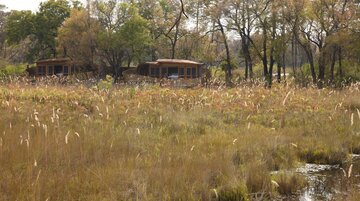 HoneymoonSandibe Okavango Safari LodgeandBeyond Sandibe Okavango Safari Lodge: A Sanctuary in the Heart of the Delta Nestled along a permanent channel of the Okavango Delta and bordering…FromR43,885pp / night sharingView
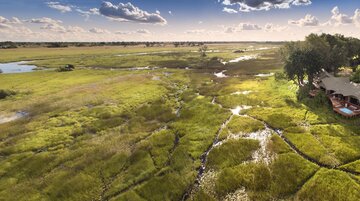 HoneymoonDuba Plains CampRenowned, and now totally rebuilt, Duba Plains Camp sits in the heart the Okavango Delta on a 77,000-acre private concession that typifies the…FromR37,660pp / night sharingView
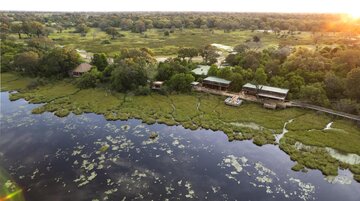 Family friendlyVumbura PlainsRATING: Vumbura Plains is set in the remote north of Botswana’s Okavango Delta—a UNESCO World Heritage Site and the world’s largest inland delta.…FromR31,153pp / night sharingView
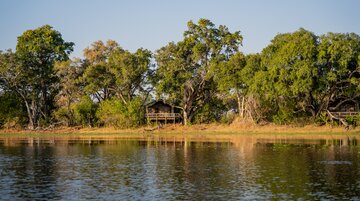 HoneymoonPom Pom CampIn the heart of the Okavango Delta within the MATSEBE concession area, Pom Pom Camp is another jewel in Botswana’s crown. PomPom Camp is short…FromR13,886pp / night sharingView
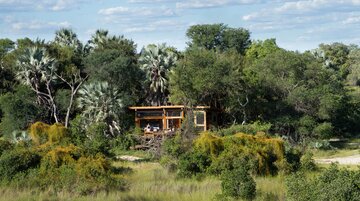 HoneymoonCamp OkavangoCamp Okavango, a unique and exclusive African safari camp is situated on the remote Nxaragha Island. This hidden treasure, in the heart of the…FromR11,267pp / night sharingView
Nothing here matches all three answers
Widen one answer, or see every camp across the reserve on the full collection page.
Browse all 38 camps
Let us help plan your next vacation
Tell us the shape of the trip
Your dates, who is travelling, and roughly what you want the days to feel like. We come back with two or three camps worth your time, priced, with the reasoning — within 15 minutes in working hours.