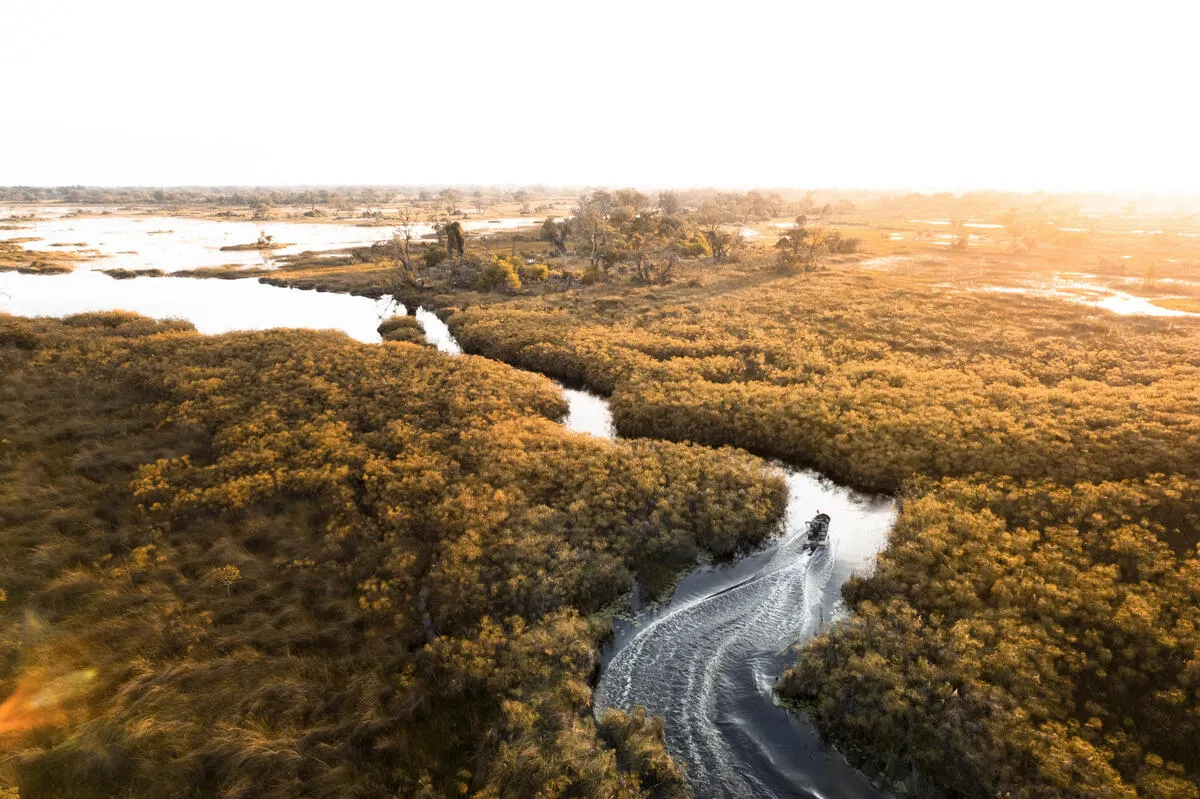
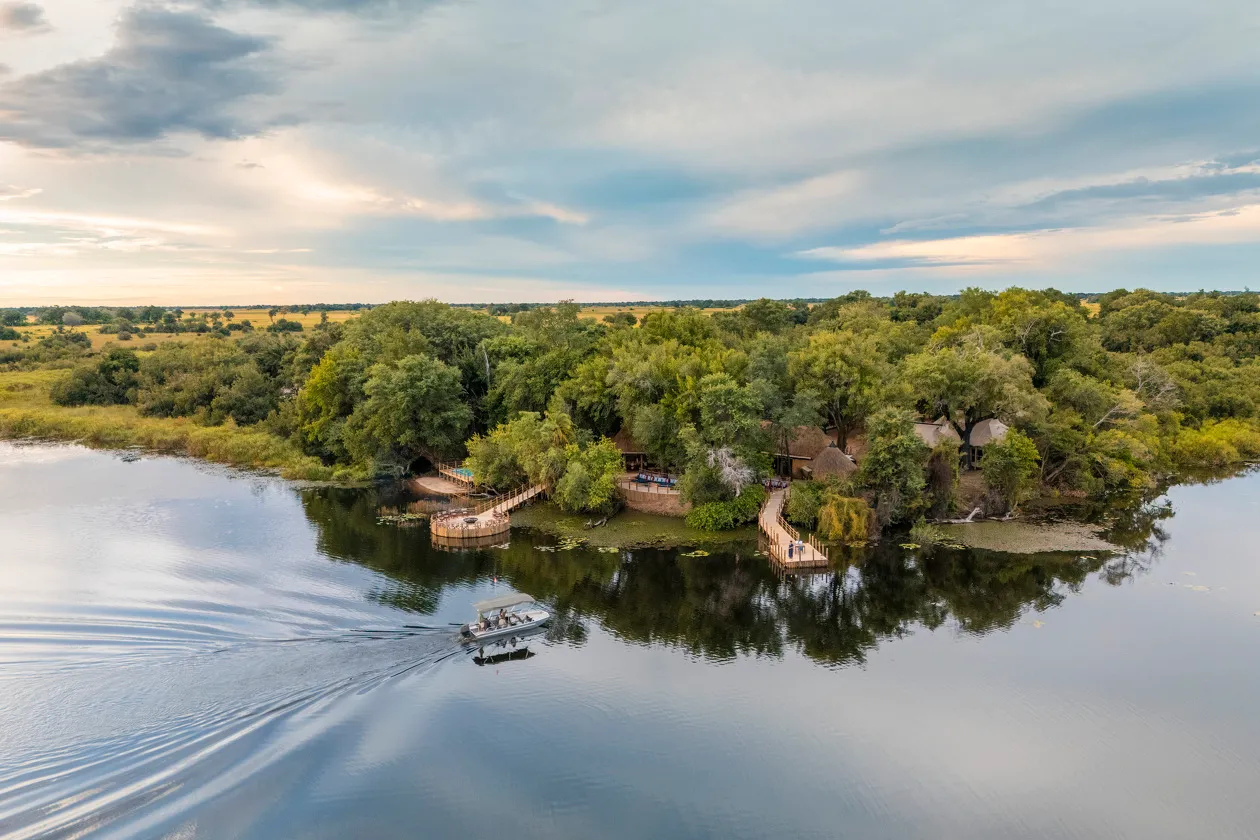
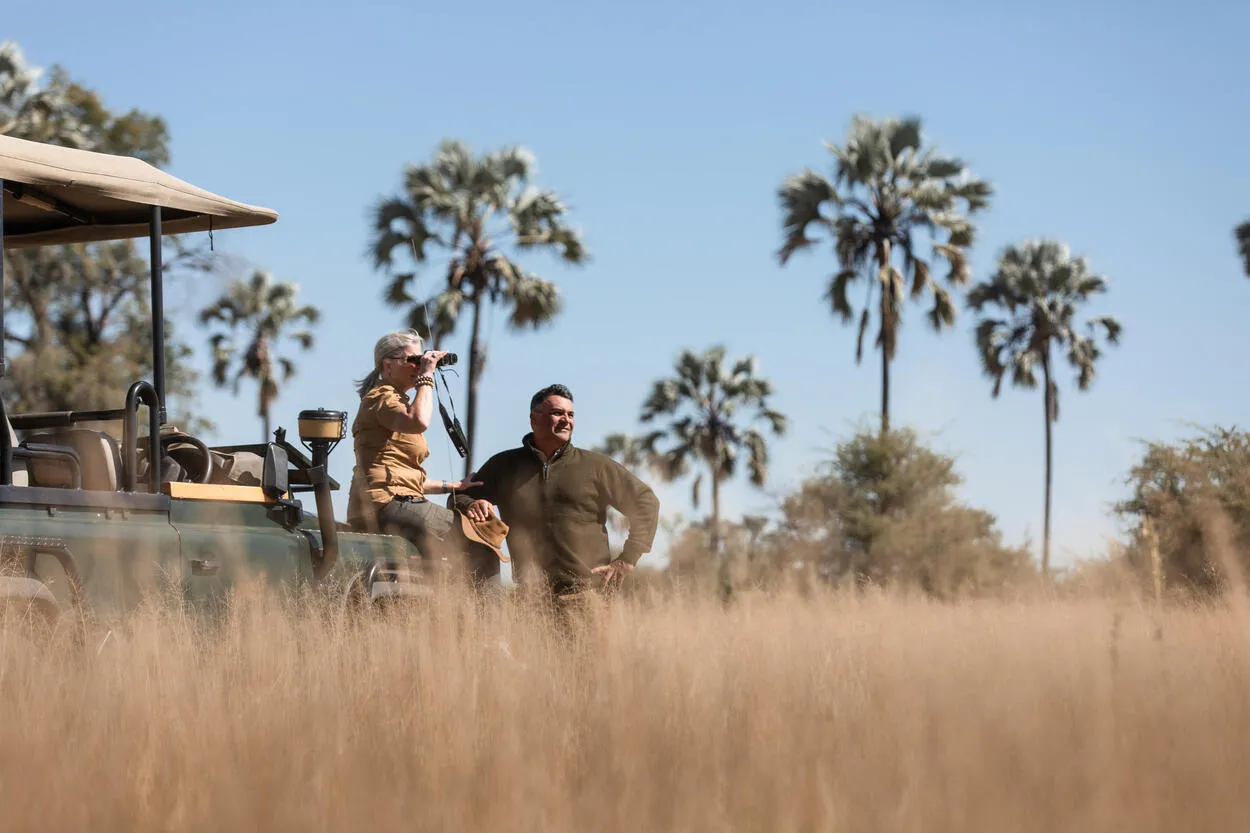
A mokoro is a traditional dugout canoe — the quintessential mode of transport in the Okavango Delta, used for centuries by the BaYei people who have lived in and around the delta for generations. A mokoro safari is a silent, paddle-powered journey through the delta’s channels and papyrus beds, guided by a local poler who propels the canoe with a long pole (ngashi) from a standing position at the stern. It is one of the most intimate and sensory experiences in African wildlife travel — eye-level with the waterline, inches from hippo paths and water lilies, in absolute silence punctuated only by birdsong and the occasional hippo grunt.
What Is a Mokoro Safari?
A mokoro (plural: mekoro) is a traditional dugout canoe or fibreglass replica, typically 4–5 metres long and wide enough for one or two passengers lying or seated low in the hull. The poler stands at the stern, using a pole to push along channels ranging from 30 cm to several metres deep. The silence of a mokoro is total — no engine, no vibration, just the sound of water parting around the hull and the extraordinary sounds of the delta. From this low vantage point, the scale of the papyrus reeds, lily pads, and water plants becomes apparent in a way that no elevated vehicle game drive can replicate.
What Do You See on a Mokoro Safari?
The mokoro’s silence and low profile make it the ideal platform for approaching wildlife that vehicle engines would disturb:
- Birds: African jacanas walking on lily pads, malachite kingfishers perched on papyrus stems, African fish eagles calling overhead, herons stalking the shallows — all visible at eye level within metres of the canoe
- Hippos: The most important safety animal on a mokoro safari. Your poler knows the delta’s hippo territories and navigates around them — occasional close approaches to hippos in the water are possible and spectacular when safely managed
- Sitatunga: The semi-aquatic antelope that specialises in swamp habitat — almost never seen on vehicle game drives — is sometimes encountered from mokoro in papyrus channels
- Water monitors: Large Nile monitor lizards sun themselves on reed beds and slide silently into the water as you approach
- Red lechwe: These semi-aquatic antelopes, perfectly adapted for running in shallow water, are abundant in the delta’s flooded grasslands — spectacular when a herd splashes across a flooded pan ahead of the canoe
- Elephant and buffalo on islands: Islands are visited by approaching from the water and then landing for a guided walk — a mokoro safari to a remote island for a walking bush experience combines two exceptional Okavango activities
Mokoro Safety in the Okavango Delta
The primary safety consideration is hippo. The Okavango Delta has a large hippo population, and mokoro travel passes through their territory. Experienced polers know the locations of resident hippo pods and plan routes that maintain safe distances. Rules:
- Always follow your poler’s instructions — they have navigated these channels for their entire lives
- Keep hands and feet inside the canoe at all times
- Remain still when the poler signals — loud noise and sudden movement attract unwanted hippo attention
- Crocodiles are present in the delta — your poler knows where to land and where not to
Serious incidents on properly managed mokoro safaris are extremely rare. This is a well-established, traditional activity with a strong safety record when conducted by experienced polers from reputable camps.
How Much Does a Mokoro Safari Cost?
Mokoro safaris are typically included in luxury Okavango lodge daily rates or offered as a separate activity from community campsites in the delta:
- From a luxury camp: Included as part of the all-inclusive daily rate — no separate charge. Standard at most Okavango lodges during the flood season.
- From community campsites (e.g., Moremi Crossing, Third Bridge area): Approximately USD 30–50 per person per hour, or USD 100–200 per person per day for a guided mokoro island excursion
When Can You Do a Mokoro Safari?
Mokoro requires water — the activity is only possible when flood levels are sufficient, typically April through October. During peak flood (June–August), mokoro is available across the widest range of channels and lagoons. September–October still has good water levels for mokoro in many areas. November–March (dry season in the delta) has limited mokoro access as channels recede.
Plan Your Okavango Mokoro Safari
A mokoro experience in the Okavango Delta is one of Africa’s most distinctive wildlife activities — available nowhere else with the same combination of wilderness, wildlife, and cultural authenticity. Our team designs Okavango itineraries that include mokoro as a core activity alongside traditional game drives.
Enquire Now to plan your Okavango Delta mokoro safari.