An Okavango Delta fly-in safari is the standard way to experience the delta’s remote interior — light aircraft charter flights from Maun Airport to private camp airstrips within the delta’s 1.5 million hectares. The flight itself is part of the experience: approaching at low altitude over a vast floodplain of interconnected channels, islands, and lagoons, with herds of elephant and buffalo visible from the air, is one of Africa’s great arrival moments. Fly-in safaris allow access to camps unreachable by road — the heart of the Okavango experience that self-drive or boat-based access simply cannot replicate.
What Is an Okavango Delta Fly-In Safari?
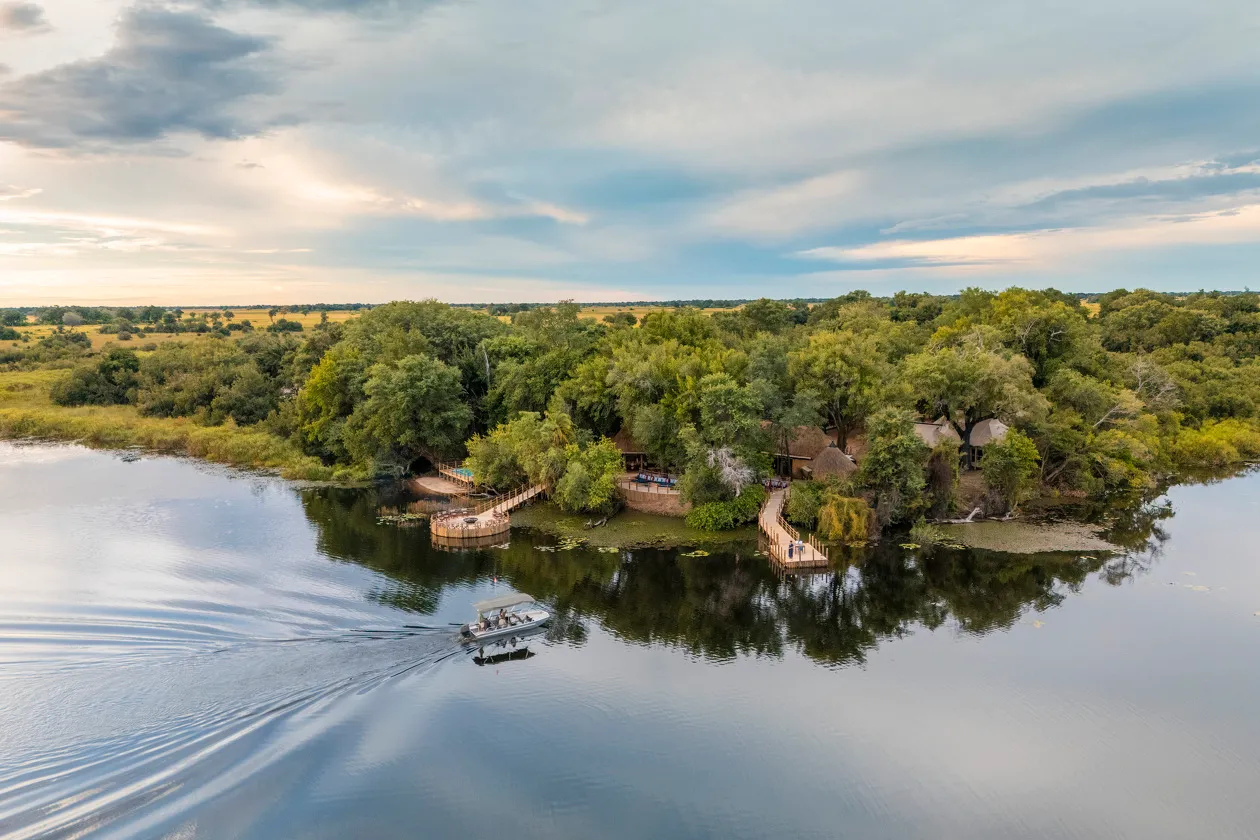
A fly-in safari is an itinerary where all travel between camps — and from Maun Airport into the delta — is by light aircraft. The aircraft are typically Cessna Caravans (13-seat turboprops), Cessna 206, 207, or 210 series (6-seaters), or Pilatus PC-12 aircraft, all operated by Botswana’s established charter companies from Maun. Each camp has a private airstrip — usually a graded sand or grass strip adjacent to the camp — where the aircraft parks and your guide and camp vehicle meet you on landing.
The Okavango Fly-In Arrival Experience
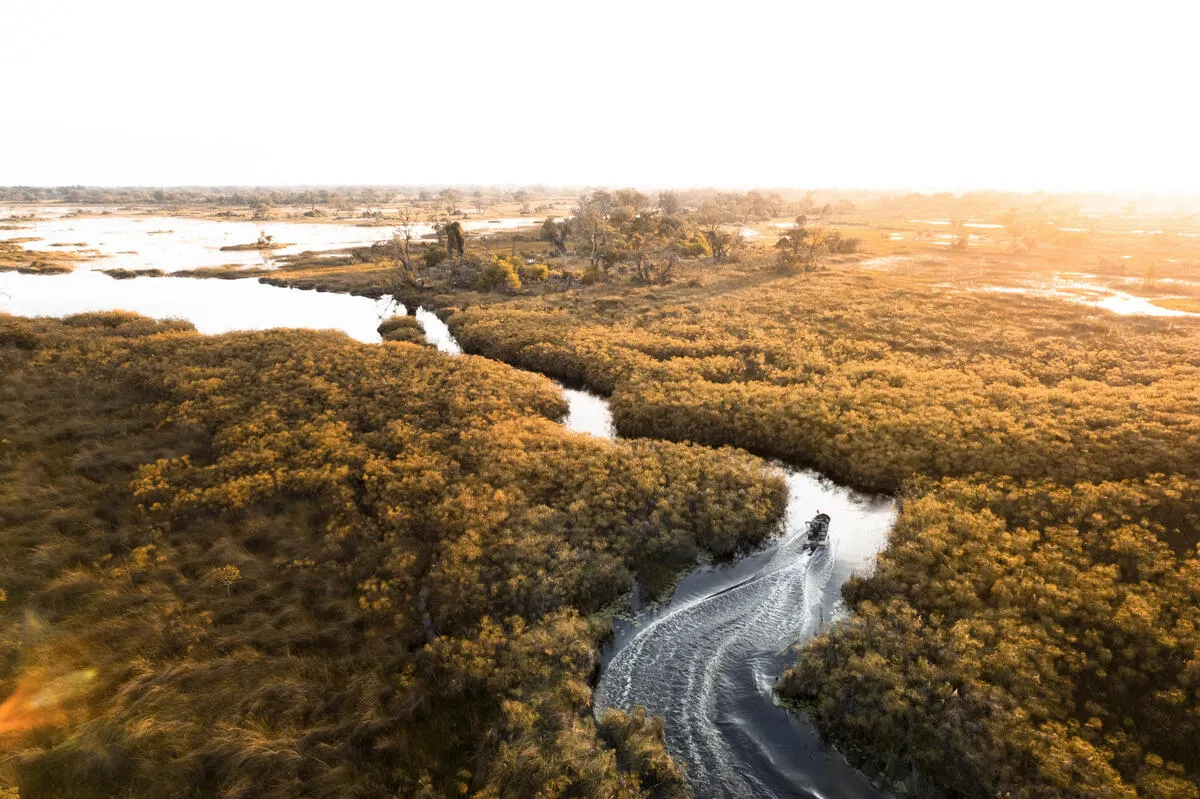
The fly-in arrival is one of African travel’s most distinctive moments. At low altitude over the delta, you see the landscape that ground-level game drives cannot reveal: the delta’s extraordinary reticulated pattern of channels, islands of papyrus and palm, red lechwe herds splashing through flooded grassland, elephant swimming between islands. Landing at a remote bush airstrip — with a ranger and open game drive vehicle waiting, a cold towel and cold drink offered, and the first sounds of the delta surrounding you — represents the transition from the world you left behind to a wilderness completely on its own terms.
Fly-In Safari Logistics: What You Need to Know
Baggage Restrictions
This is the most important practical consideration for Okavango fly-in safaris:
- Weight limit: 15 kg per person — strictly enforced
- Bag type: Soft-sided bags only (duffel or kit bag). Hard suitcases are not permitted — they cannot be loaded into small charter aircraft hold spaces.
- Camera equipment: Camera bodies and lenses count toward your weight allowance. Professional photographers should discuss allowances in advance.
- Excess luggage: Store at Maun in a hotel or charter company storage facility. Most Botswana lodges provide daily laundry — pack light and re-wear.
Flight Scheduling
Charter flights in Botswana typically operate in the morning and early afternoon. Flights before 6:30am and after 3pm are generally avoided — early morning light aircraft are at heightened wildlife risk during the game drive peak hours; afternoon flights risk landing in deteriorating light. Your operator will schedule your flights around these operational windows and coordinate camp arrival times.
Weather Considerations
Botswana’s summer thunderstorms (November–March) can delay or reroute charter flights. Experienced Botswana operators manage this routinely; delays are part of the bush experience rather than a crisis. The dry season (April–October) is the most reliable for charter schedules.
Multi-Camp Fly-In Itineraries
The most rewarding Okavango fly-in itineraries move between 2–3 camps within the delta — experiencing the delta’s different zones, flood levels, and wildlife communities. A typical multi-camp fly-in:
- Camp 1 (3 nights): Northern delta (Jao area) — peak water level, exceptional mokoro and boat activities
- Camp 2 (3 nights): Chief’s Island (Mombo or Chitabe area) — drier, better vehicle access, stronger predator territory
Total: 6 nights, 2 camps, accessed by Maun → Camp 1 charter → Camp 2 charter → Maun return flight. The in-camp charter connecting the two camps takes 20–40 minutes and offers aerial views of the delta landscape between the two zones.
Fly-In vs Road Safari in the Okavango
The vast majority of the Okavango Delta’s best camps are only accessible by air — road access is impossible or impractical to most of the delta’s private island camps. The “road” alternative in the Okavango is a limited selection of camps accessible by boat or 4×4 via Moremi Game Reserve. These are legitimate alternatives for more budget-conscious travellers, but they do not reach the remote interior camps that define the Okavango’s unique character.
Plan Your Okavango Fly-In Safari
Our team coordinates Okavango fly-in itineraries in detail — charter schedules, camp bookings, luggage strategy, and multi-camp routing that maximises your wildlife and experience across the delta’s diverse zones. The logistics, though complex, are entirely manageable with the right planning.
Enquire Now to plan your Okavango Delta fly-in safari — we’ll handle every detail of the journey.